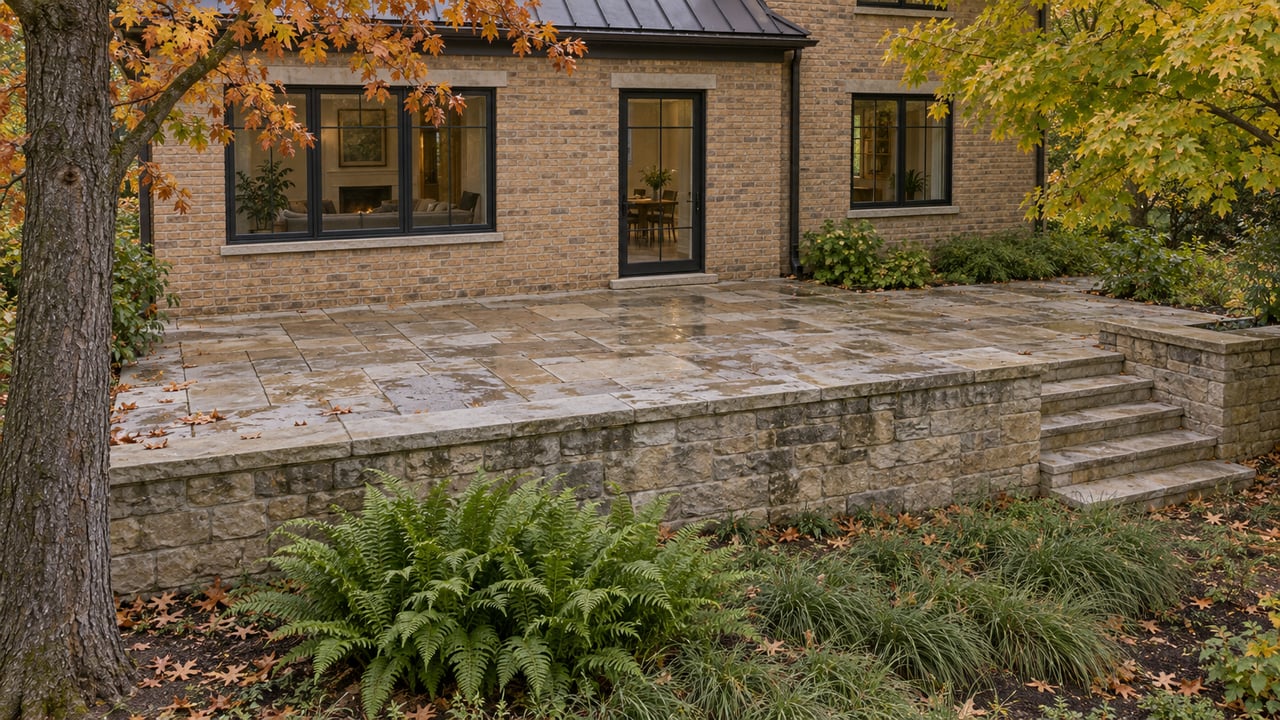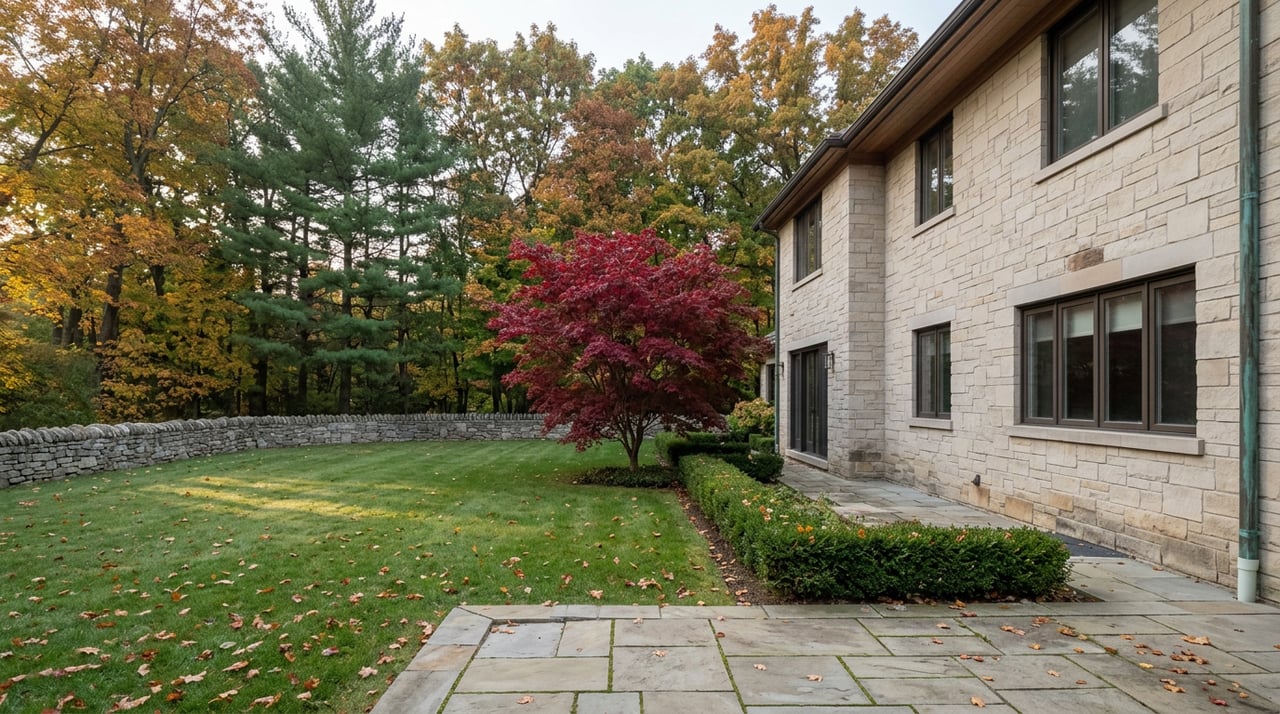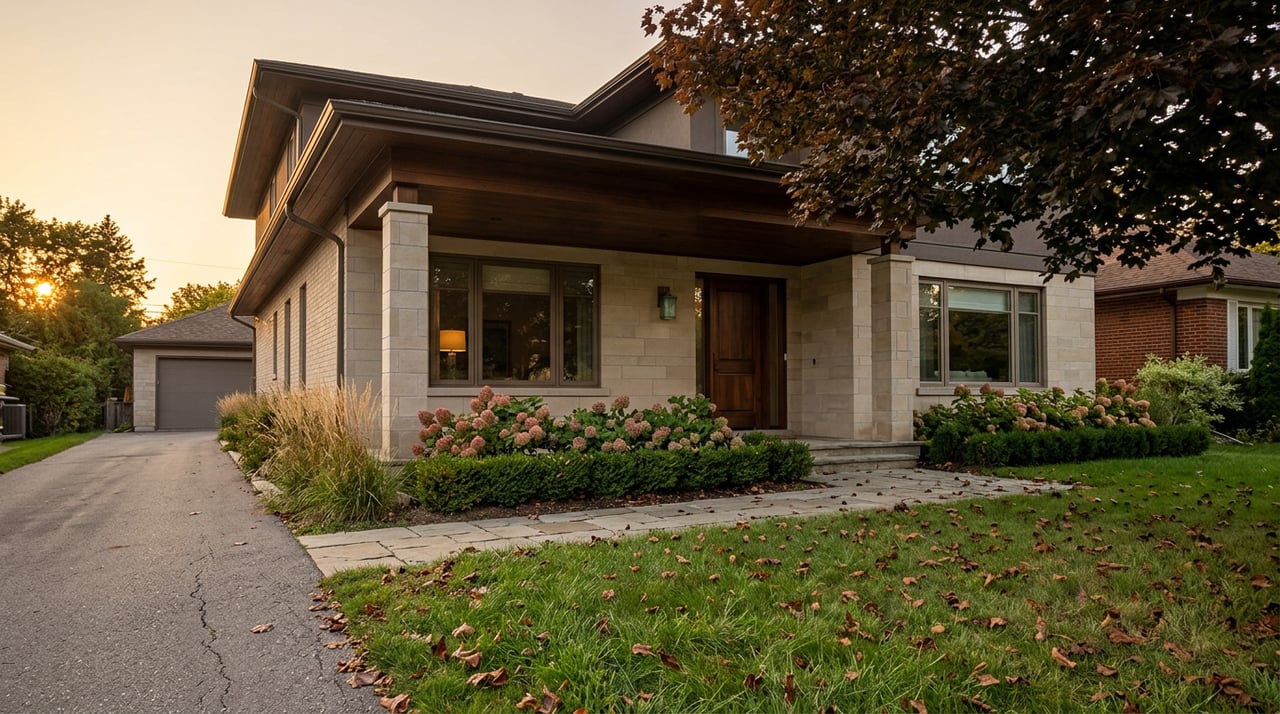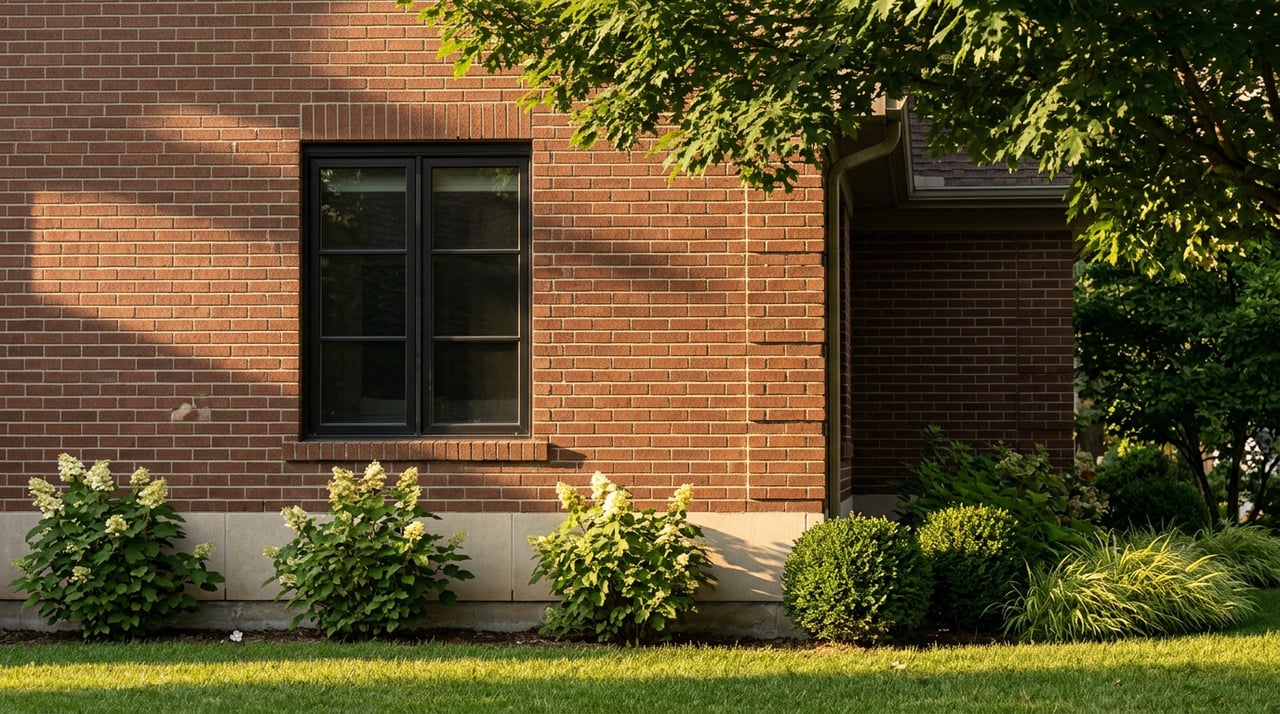
A four-bedroom detached in Clearview trades for roughly $1.4M to $1.7M while a comparable four-bedroom one neighbourhood east in Joshua Creek often clears north of $2M. The houses are close cousins. Same construction era for much of the stock, same brick-and-stucco vocabulary, same school-belt access, the same drive to the QEW. The gap is real and persistent, and most buyers attribute it to "feel" or "prestige." That story is incomplete.
The more useful explanation is structural, and it lives in three numbers that almost never appear in a comp report.
The number that explains the gap
In all of 2024, Clearview recorded 41 firm sales across approximately 2,200 homes, down from 45 in 2023, 63 in 2022, and 91 in 2021. That is annual turnover of about 1.9 percent, sliding toward 1.8. A neighbourhood of this size in a comparable Oakville pocket would typically transact 70 to 110 times in a normal year.
That thin volume is the friction. When fewer than four homes change hands in a typical month, the appraisal comp set is shallow, the listing agent's "recent sold within 500 metres" search returns nothing useful, and the buyer's agent ends up reaching into Iroquois Ridge South or Joshua Creek for support. The moment a Joshua Creek comp enters the conversation, both sides anchor to the wrong number. Sellers see the upside and price aspirationally. Buyers see the ceiling and discount aggressively. The discount almost always wins, because in a balanced June 2026 market with Oakville detached averages near $2.40M and well-priced homes still moving in weeks, the buyer has the time to wait out an over-ambitious list.
The 2024 average sale-to-list of roughly 101 percent in Clearview tells you the discipline is at the list price, not in the bidding war. Sellers who price to the Clearview comp set transact. Sellers who price to the Joshua Creek comp set sit.
What "no condos" actually means
Clearview has no condominiums. Not a tower, not a stacked townhouse with shared elements, nothing with a status certificate. For a community of 2,200 homes inside a town of Oakville's density, that is unusual, and it has two consequences buyers rarely price in.
The first is that Clearview has no entry-level floor. Most established Oakville pockets have a condo or freehold-townhouse tier that anchors the bottom of the market and feeds move-up buyers into the detached stock above. Clearview's lowest-priced product is a semi-detached or linked home, with the 2024 entry sale at $925,000. That floor is high enough to filter out the buyer pool that would otherwise create competitive pressure on the detached tier.
The second is that no condo board means no monthly fee comparable, no rental-unit overhang during downturns, and no easy "starter purchase" path for the children of existing residents. Turnover stays low because residents who would otherwise downsize within the neighbourhood have nowhere to go. They sell and leave the neighbourhood entirely, which is one reason 2,200 homes generate so few transactions.
| Submarket | Typical detached range (June 2026) | Internal commercial spine | Condo inventory | Annual sales volume signal |
|---|---|---|---|---|
| Clearview | $1.4M – $1.7M for four-bed | None | None | ~41 firm sales in 2024 |
| Joshua Creek | $2.0M+ benchmark | Adjacent Trafalgar Road retail | Limited | Higher turnover, deeper comp set |
| Eastlake | $2.0M+ benchmark | Lakeshore Road East corridor | Some | Higher turnover, deeper comp set |
The table is a useful frame, but the punchline is in the third and fourth columns. Joshua Creek and Eastlake both have either a walking-distance retail spine or a recognizable address line. Clearview has neither. Its borders define it instead.
What the borders actually do to price
Clearview is hemmed in by the QEW to the north, Winston Churchill Boulevard to the east, Cornwall Road to the south, and Ford Drive to the west. Those are four hard edges, two of them major highways, and none of them are amenity corridors. The southeast corner of the neighbourhood is zoned for commercial and industrial use, including some still-undeveloped parcels, which is rare for a residential pocket of this price tier in Oakville.
The original 1800s farming village of Sheridan occupied the same footprint until the construction of the QEW in 1937 cut through it. Sheridan amalgamated into Oakville in 1962, and the residential build-out only began in the 1980s after Cecil Lawrence subdivided his landholdings. That history matters now because the borders were set before the neighbourhood had any retail or institutional centre of gravity. The houses came in around an absent middle.
What residents got instead is a remarkable amenity belt on the other side of Ford Drive. The Iroquois Ridge Community Centre is the nearest public recreation hub, with a 25-metre competitive pool, leisure pool, fitness centre, gym and library branch. The surrounding Glenashton Park holds a skate park, pickleball and tennis courts, a cricket ground, a dog park, a splash pad, and the town's only bocce court. Inside Clearview itself, Kingsford Gardens sits on an elevated corridor with views toward Lake Ontario and includes a community garden where residents can rent plots. Clearview Park and Woods carry a natural ice rink, soccer and softball fields, and the Clearview Woods Trail. The Avonhead Ridge Trail links Kingsford Gardens, Wynten Park, Bishopstoke Park, and Jonathan Park into a walkable green spine.
That is a serious recreation footprint. It is also entirely off-arterial, which means it does not generate the storefront density that buyers visually read as "neighbourhood quality." The addition of James W. Hill Public Elementary School, after a long wait, materially closed the school-access gap with Iroquois Ridge North, but it did not give Clearview a Main Street and never will.
The borders make Clearview quiet. The quiet is the product. What buyers pay for in Joshua Creek is partly the option to walk to a coffee. What buyers save in Clearview is the cost of that option, plus a liquidity discount for the thin comp set.
How the gap plays at the offer table in June 2026
In a market where Oakville is balanced rather than tilted, the Clearview discount widens slightly because buyers have the time to do the analysis above, and because the comp shallowness rewards patience. A few moves matter:
- Anchor the comp set inside the borders. A Joshua Creek sale on Grand Boulevard is not a Clearview comp, even at the same square footage. The defensible comp set is Clearview's own 30 to 40 trailing sales, supplemented by Iroquois Ridge South where the housing era and lot scale match. Bringing a Joshua Creek comp into the conversation as a seller almost always backfires.
- Price for the list-price discipline, not the bidding war. The 2024 sale-to-list of around 101 percent tells the seller where the market clears. Listing at the expected sale number, rather than 5 to 8 percent below to invite offers, has historically transacted faster in Clearview than the staged-bid approach that works in tighter Oakville pockets.
- Build the condition window into the strategy. With June 2026 inventory across Oakville sitting at thousands of active listings and well-priced homes moving in weeks rather than days, buyers in Clearview have room to include inspection and financing conditions without losing the property. Sellers who refuse to entertain conditions in this segment are negotiating against the calendar.
- Read the lot, not the listing. Clearview's uniform 1980s–1990s brick stock means the variation between houses comes from lot, exposure, and infill renovation quality, not architectural pedigree. The premium tier inside the neighbourhood is consistently the deeper lot backing onto green space rather than the larger floor plate on the standard frontage.
The buyer who internalises those four points typically saves five to seven percent against an uninformed offer. The seller who internalises them typically transacts thirty to sixty days faster than the neighbour who anchors to Joshua Creek and waits.
A short FAQ
Is the Clearview discount likely to close as Joshua Creek and Eastlake appreciate? Some convergence is plausible as the James W. Hill PS effect matures and as Iroquois Ridge amenities continue to pull residents into shared use of Glenashton Park and the community centre. The structural drivers, hard highway borders, no commercial spine, no condo floor, are durable. A meaningful share of the gap is permanent.
Does the industrial zoning on the southeast corner affect resale on the residential streets? The zoning affects sightlines and traffic patterns on the streets closest to Winston Churchill Boulevard more than it affects the interior. Resale impact concentrates within two or three streets of the boundary. The interior streets behave like a typical established Oakville pocket on the comp data.
Is the low turnover a sign of a weak market or a stable one? In Clearview's case, stable. The 2024 sale-to-list of approximately 101 percent and an average of around 15 days on market indicate that homes are pricing accurately and clearing. Volume is low because residents stay, not because buyers are absent.
If you are weighing a Clearview detached against a Joshua Creek or Iroquois Ridge South alternative this summer, or preparing to list inside the neighbourhood and want to anchor your strategy to the right comp set, Mr. Sold Group can model the trade in detail and walk you through the offer-table mechanics specific to your street. Start with a free home valuation.